On the Dash:
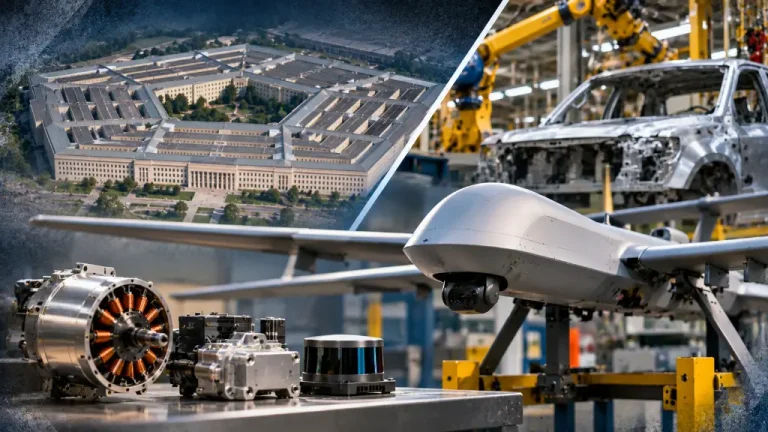
- The Pentagon is in preliminary talks with GM, Ford, Magna International, and other manufacturers to help expand military drone production.
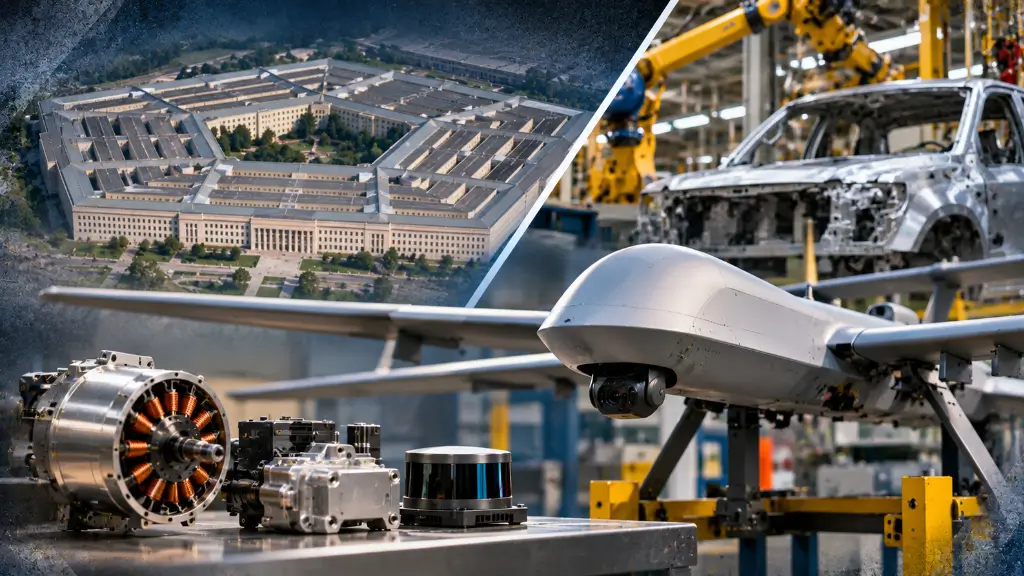
- Potential work could include supplying motors, actuators, engines, sensors, lidar and other components to drone companies.
- Automakers are weighing the opportunity against low margins, uncertain defense spending and concerns about becoming more closely associated with weapons production.
The Defense Department is in preliminary talks with General Motors, Ford and other manufacturers about helping mass-produce drones, in its latest effort to use the auto industry’s assembly lines to boost production of critical munitions and equipment, The Wall Street Journal reported Nov. 24, citing people familiar with the matter.
According to the report, Defense Department leaders have spent months enlisting automakers and their supply chains to scale up production of everything from missiles to tactical trucks. They now want those companies to help ease shortages of unmanned systems, including surveillance and strike drones.
People involved in the talks said auto companies would supply parts such as actuators, engines, sensors and lidar to drone companies under a deal, and no deals have been finalized. The same people said Trump administration officials have received mixed reactions from automotive executives. According to the report, GM is weighing whether to manufacture drone motors closer in size to a riding lawn mower motor than a car engine, while defense officials have met with leaders at Ford, Canadian parts maker Magna International, and other manufacturers, including some outside the auto industry.
Meanwhile, the Pentagon says it plans to buy millions of drones in the coming years. But Defense Department leaders have realized that American drone companies, many of them small and lacking the manufacturing experience or capacity to meet that demand, are ill-equipped for the task. China, meanwhile, has dominated the global drone industry for more than a decade, serving as the primary or sole supplier of many parts.
Profitability & reputational concerns remain obstacles
While small, expendable drones are a low-margin business that automakers may lose money on, auto companies worry that defense work falls outside their core operations, that weapons production carries reputational risk, that Pentagon demand is choppy and that annual congressional funding approvals are uncertain.
According to the report, Ford has steered clear of weapons manufacturing and has stuck to supplying the Pentagon with vehicles and equipment more closely aligned with its commercial lineup. The political risks of signing a deal with the administration have increased since the midterm elections. To address those concerns, the department is running the effort through a four-star combatant command Defense Secretary Pete Hegseth created this fall to consolidate drone production and development across the military branches, on the theory that larger contracts are more likely to be profitable at scale.
Navy SEAL Senior Chief Petty Officer Max Strasiser, appointed to help set up the drone initiative, said the department had to unify its buying power to send a demand signal and that manufacturers need “a dollar amount that justifies them switching over a factory.” The Pentagon sees the military drone market reaching $20 billion to $30 billion annually, and people familiar with the matter said the department is prepared to offer auto companies large sums of money.
What the talks could mean for dealers
Although no deals have been finalized yet, the ongoing discussions don’t affect vehicle production or dealer inventory. The Journal didn’t clarify whether drone-parts work will take place in plants that also manufacture cars and trucks. Automakers are likely to provide components like motors and sensors instead of full drones. So, dealers should watch for any changes in factory capacity toward defense contracts, as the financial justification must be clear. Revenue from defense contracts could give automakers a cushion beyond vehicle sales, and finalized contracts and announcements about the work location would provide dealers with clearer signals.