Welcome back to the latest episode of The Future of Automotive on CBT News, where we put recent automotive and mobility news into the context of the broader themes impacting the industry.
I’m Steve Greenfield from Automotive Ventures, and I’m glad that you could join us.
This week on The Future of Automotive, the debate over how cars are sold in America is once again heating up—and this time, there are real signs of momentum.
During the COVID era, a number of automakers openly explored selling vehicles directly to consumers, bypassing the traditional franchise dealership model. That conversation largely quieted down in recent years—but now, it’s resurfacing in a meaningful way.
This week, electric vehicle startup Rivian secured a significant victory in Washington State, winning the right to sell vehicles directly to consumers after a years-long fight with powerful dealer groups.
The turning point came when Rivian threatened to take the issue directly to voters—backed by polling showing roughly 70% public support for direct sales. Faced with that pressure, the dealer lobby reversed course. Lawmakers ultimately approved a narrow compromise: a carve-out allowing direct sales for Rivian and Lucid, while preserving the broader franchise system for traditional automakers.
Until now, Tesla had been the only company with that kind of exemption in Washington. That exclusivity is now over.
The decision underscores something bigger—growing consumer interest in bypassing dealerships altogether, and the appeal of a direct-to-consumer model that offers automakers greater control over pricing, branding, and the customer experience.
For Rivian, the timing is critical. The company is preparing to scale production of its more affordable R2 SUV—a vehicle that will depend on broader, mainstream adoption. Under prior rules, Rivian could showcase vehicles and offer test drives, but couldn’t discuss pricing or complete a sale in-store. Customers often had to go online or even travel out of state—adding friction and, in many cases, costing sales.
Traditional automakers—including GM, Ford, and Toyota—strongly opposed the Washington carve-out, arguing it creates an uneven playing field. They maintain that the franchise system promotes competition, supports local businesses, and provides essential services like financing and repairs.
And the new law comes with strict guardrails. It applies only to EV-only manufacturers with no existing franchise networks, requires U.S.-based production, and sets minimum thresholds for vehicles already registered in the state. In other words, it’s designed to limit disruption—at least for now.
But Rivian isn’t stopping there. The company is already eyeing other states where ballot initiatives could be used to push similar changes—places like Ohio, Oklahoma, Arkansas, and Nebraska. The strategy is simple: when put to a vote, consumers tend to favor more choice.
At the same time, not every direct-to-consumer effort is gaining traction.
In California, Scout Motors—backed by Volkswagen—is facing a major legal setback. A federal judge has allowed a lawsuit from the state’s dealer association to move forward, rejecting key motions to dismiss. The suit argues that Scout’s plan to sell directly violates California law, particularly because it is considered an affiliate of Volkswagen, which already operates through franchised dealers.
The case also raises questions about how Scout marketed its vehicles—specifically, whether taking refundable deposits from consumers may have violated state law.
The ruling marks a significant hurdle for Volkswagen as it prepares to launch Scout in the U.S., and similar legal challenges are emerging in other states.
And then there’s Honda.
In a notable shift, Honda and Sony are pulling back from their Afeela electric vehicle program in North America—canceling early models and reevaluating the joint venture altogether. The move reflects broader challenges in the EV market, including slowing demand, rising costs, and changing regulatory dynamics.
For dealers, the cancellation comes as a relief. Many had criticized the Afeela project as a direct threat to the franchise system, given its plan to sell vehicles directly to consumers.
So, where does all of this leave the industry?
On one hand, Rivian’s win in Washington suggests that the direct-to-consumer model is gaining incremental ground—especially in EV-friendly markets. On the other hand, legal pushback in California and strategic retreats like Honda’s show just how complex—and uncertain—the path forward remains.
In the near term, this doesn’t appear to pose a major earnings risk for traditional auto dealers. The Washington law is narrowly tailored, and franchise protections remain firmly in place.
But over the longer term, the implications are harder to ignore.
What we’re seeing is a gradual shift—one where dealer protections, once considered nearly untouchable, can be challenged, and in some cases, weakened—particularly when consumer sentiment and political strategy align.
For now, the system holds.
But the pressure is building—and it’s something the entire industry will be watching very closely.
So, with that, let’s transition to Our Companies to Watch.
Every week we highlight interesting companies in the automotive technology space to keep an eye on. If you read my weekly Intel Report, we showcase a company to watch, and take the opportunity here on this segment each week to share that company with you.
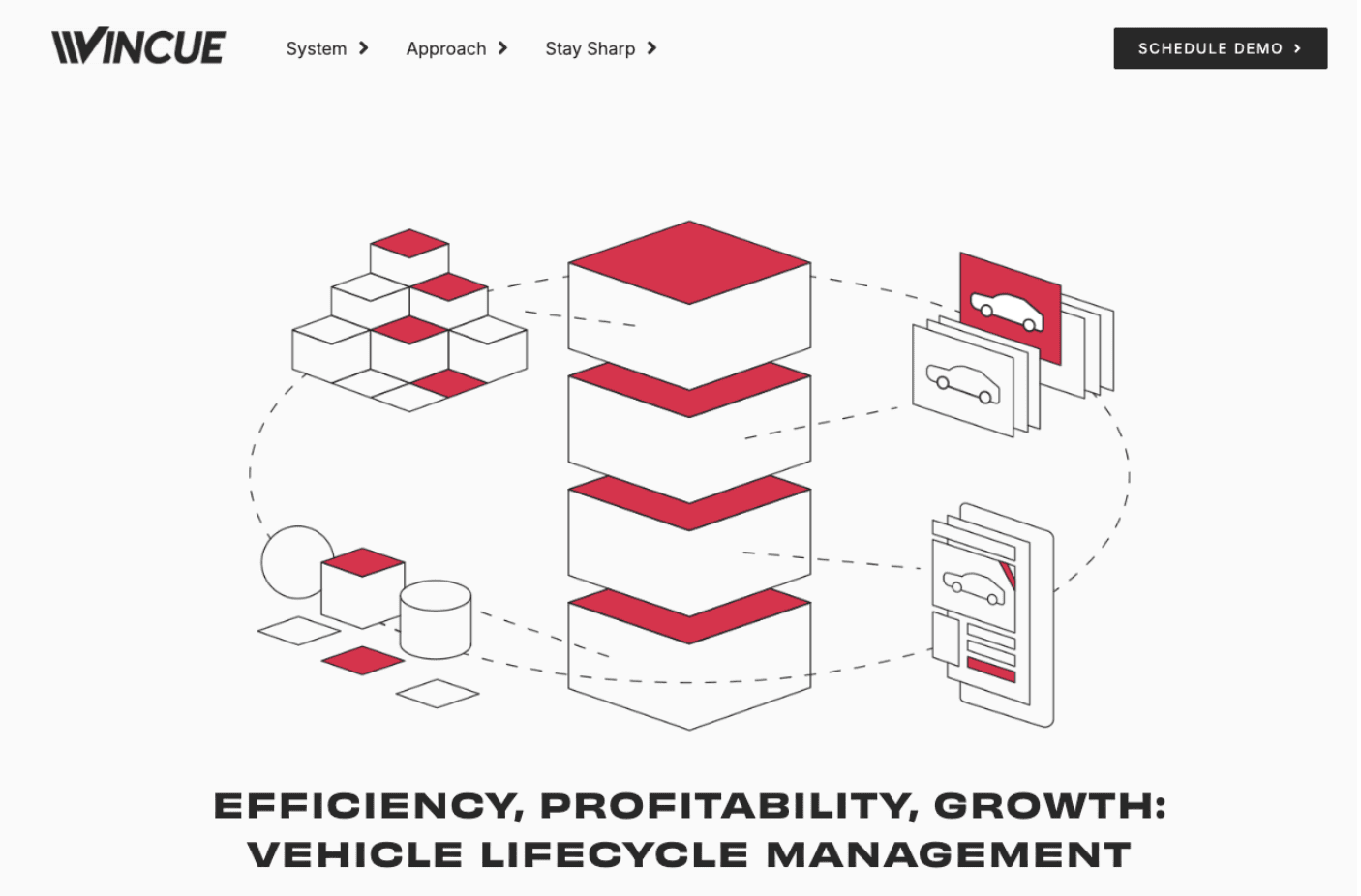
Today, our new company to watch is VINCUE.
VINCUE is the re-invention of Vehicle Lifecycle Management, built into a single cutting-edge platform, designed to supercharge profit and efficiency for retail automotive dealerships and groups.
VINCUE unifies every step of the inventory Plan, Buy, Manage, and Sell cycle to give dealers more market and performance data, more intelligent acquisition and merchandising tools, and greater visibility across stores and groups to make better buying and exit decisions for faster turn and higher front-end gross per copy.
VINCUE is built on top of powerful inventory and market data that intelligently activates inventory history and details, dealership sales performance, online buyer activity, auction and wholesale transactions, and market performance to present the definitive truth of the market at every moment.
This insight offers signals to operators making more informed decisions about what to buy, how much to pay, where to source, and how to attract most likely buyers. The net result is dealers who outperform the market in gross and turn.
If you’d like to learn more about VINCUE, you can check them out at www.VINCUE.com
So that’s it for this week’s Future of Automotive segment.
If you’re an AutoTech entrepreneur working on a solution that helps car dealerships, we want to hear from you. We are actively investing out of our new Mobility Fund.
Don’t forget to check out my two books, The Future of Automotive Retail and The Future of Mobility, both available on Amazon.com.
Thanks (as always) for your ongoing support and for tuning into CBT News for this week’s Future of Automotive segment. We’ll see you next week!